
Noah Klein · 21 October 2026
Decoding Server Log Patterns to Enhance Content Discovery in Scalable Digital Ecosystems
Server logs record every request that reaches a web server, and analysts examine these records to identify how search engines and other automated systems locate and prioritize content within expansive digital environments. Access logs typically include timestamps, requested URLs, HTTP status codes, user agent strings, and referrer data, while error logs capture failed attempts that might signal structural issues blocking discovery. Researchers at institutions like the National Institute of Standards and Technology have documented how systematic review of these entries reveals patterns in crawler behavior that directly influence which pages receive attention in large-scale deployments.
Core Components of Server Log Data
Each entry in a standard access log provides granular details that accumulate into broader trends over time, and teams process billions of such lines daily in high-volume ecosystems. Timestamps allow reconstruction of crawl sequences, whereas URL paths highlight which sections of a site attract repeated visits from indexing bots versus those that remain untouched. Status codes such as 200 for successful deliveries or 404 for missing resources point to immediate obstacles, and user agent identification separates known search engine crawlers from miscellaneous traffic. Observers note that combining these elements produces maps of content accessibility that static sitemaps alone cannot supply.
Identifying Crawl Patterns Through Log Analysis
Pattern recognition begins with aggregation of repeated requests to specific directories or file types, and algorithms cluster similar behaviors to surface anomalies like sudden drops in visits to previously active sections. In October 2026, platforms handling millions of dynamic pages continue to rely on this approach because manual audits prove impractical at that scale. Data indicates that logs often expose disproportionate attention given to certain categories, such as product detail pages in e-commerce setups or article archives in publishing networks, while deeper or less-linked resources receive minimal attention. Those who study these distributions find that adjusting internal linking structures based on log-derived insights can redistribute crawler focus without requiring changes to external signals.
Techniques for Pattern Extraction and Application
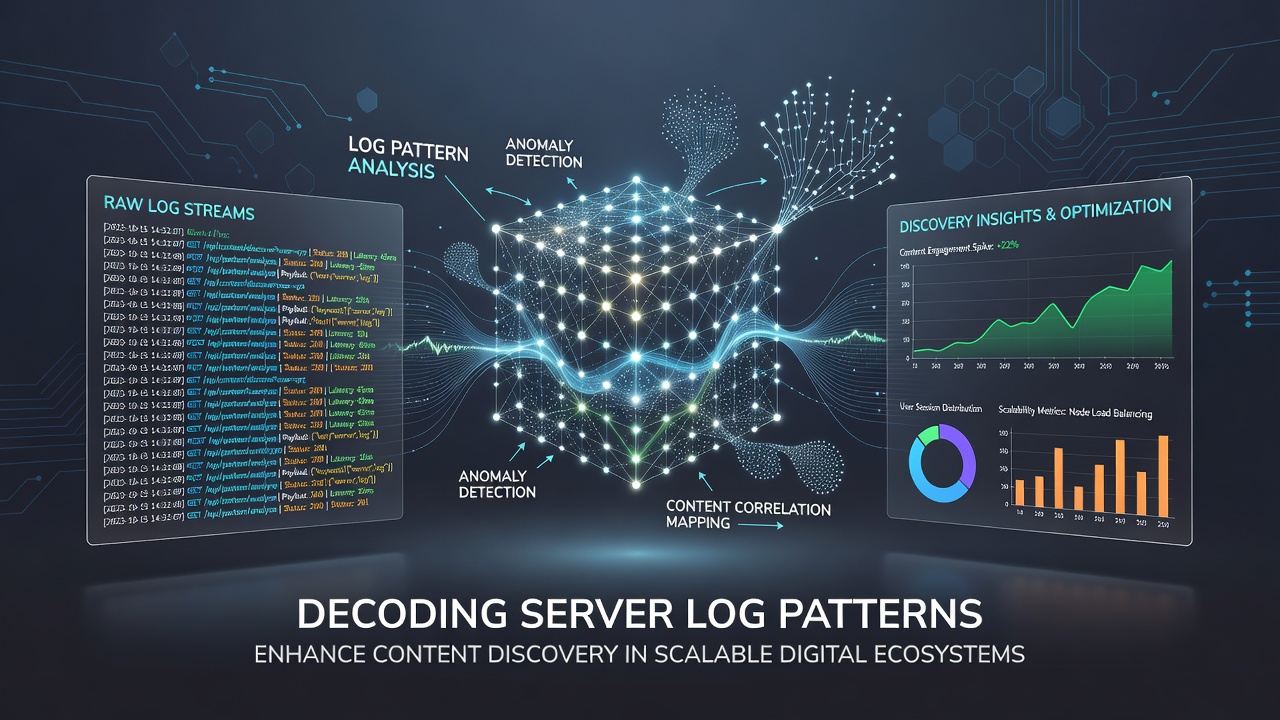
Processing pipelines ingest raw logs into databases that support queries for frequency, sequence, and correlation with content metadata, and machine learning models trained on historical records predict future crawl likelihood for individual URLs. Analysts segment data by time windows to detect daily or weekly rhythms, and they cross-reference with server response metrics to isolate cases where slow pages lose priority. One documented workflow involves exporting filtered log subsets to visualization tools that render heatmaps of discovery activity, allowing teams to spot clusters of under-visited content that share common attributes like deep nesting or missing schema markup. According to findings published by the Internet Society, such visualizations have guided adjustments in URL parameter handling that improved overall content reach in multi-terabyte repositories.
Integration With Broader Discovery Mechanisms
Log-derived intelligence feeds into decisions about robots.txt directives, canonical tag placement, and sitemap updates, and these adjustments close gaps that pure crawl budget allocation cannot address. In scalable setups spanning multiple data centers, logs from edge servers provide regional variations in how content surfaces to different geographic crawlers. Studies from the European Commission's digital infrastructure reports show that correlating log patterns with update timestamps helps prioritize fresh material for indexing queues. Teams also monitor shifts after site migrations or content refreshes, using before-and-after comparisons to measure whether discovery rates recovered or declined. This feedback loop operates continuously, with automated alerts triggered when expected crawler visits fall below established baselines.
Case Examples From Large-Scale Environments
One media network processing several hundred thousand articles daily used log segmentation to identify that video embed pages received far fewer visits than text counterparts despite similar internal prominence, and subsequent restructuring of navigation pathways increased their crawl frequency measurably. Another enterprise managing user-generated content across global domains tracked bot sessions in logs to uncover that certain API endpoints were being hit repeatedly without corresponding indexation gains, prompting the addition of structured data that aligned better with crawler expectations. These instances demonstrate how raw log signals translate into concrete modifications that enhance the visibility of previously overlooked material.
Challenges in High-Volume Log Processing
Volume presents the primary constraint, since uncompressed logs from popular sites can exceed terabytes per week, and storage plus query performance require distributed systems that maintain accuracy across shards. Privacy regulations in various jurisdictions further complicate retention policies, requiring anonymization steps before long-term analysis. Yet organizations that implement tiered storage, keeping recent logs hot while archiving older entries, maintain teh ability to run both real-time anomaly detection and retrospective trend studies. Data from academic reviews at institutions such as the University of Melbourne indicates that selective sampling strategies preserve essential pattern information while reducing computational overhead.
Future Directions in Log-Driven Discovery
Advancements in real-time stream processing allow immediate reaction to emerging patterns, such as sudden spikes in requests to new content categories, and integration with graph databases helps model relationships between discovered and undiscovered pages. As ecosystems grow through acquisitions or organic expansion, log analysis scales by incorporating metadata from content management systems to enrich raw request records. Continued refinement of these methods supports more precise allocation of resources toward content that would otherwise remain hidden from automated discovery processes.
Conclusion
Server log analysis supplies actionable signals that complement traditional crawling directives and structured data initiatives in expansive digital platforms. By systematically decoding request patterns, status distributions, and temporal behaviors, teams identify opportunities to surface additional content that automated systems might otherwise overlook. The approach relies on established data practices rather than novel inventions, and its effectiveness grows with the volume and complexity of the underlying ecosystem. Ongoing refinements in processing tools and correlation techniques ensure that log-based insights remain relevant as site architectures evolve.