Noah Klein · 7 October 2026
Examining the Impact of Server Response Times on Indexation Rates for High-Volume Content Sites
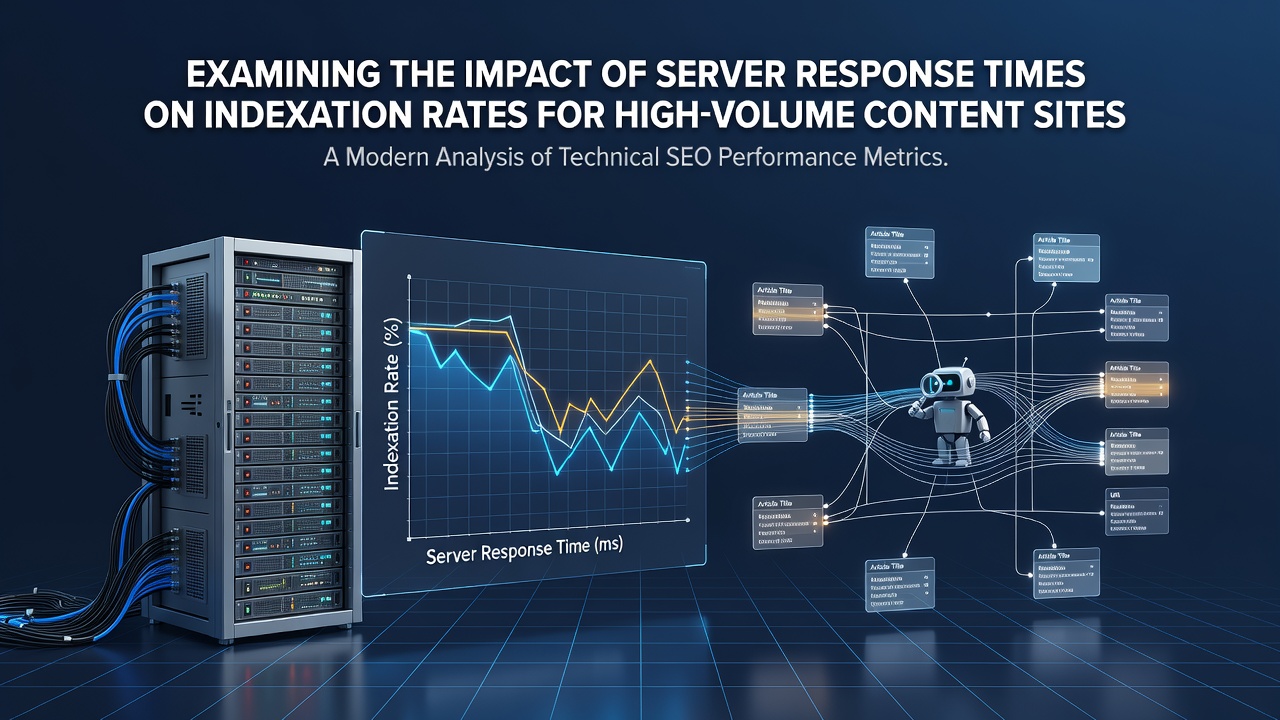
Server response times directly influence how search engine crawlers allocate resources across large websites, and data from multiple technical analyses shows measurable effects on the percentage of pages that enter the index. High-volume content sites, which publish thousands of new URLs each month, face particular constraints because crawlers operate within finite budgets per domain. When response times increase beyond certain thresholds, the number of successfully fetched pages declines, and subsequent indexation rates follow the same downward pattern.
How Crawlers Measure and React to Response Times
Search engines record the time between request and first byte for every URL they attempt to access, then factor those measurements into decisions about future crawl frequency. Observers note that average response times above 1.5 seconds often coincide with reduced crawl rates on sites exceeding 100,000 pages. The relationship appears because slower responses consume more of the available crawl budget without yielding additional indexed content. Researchers have tracked this pattern across news publishers, e-commerce platforms, and content aggregators where daily URL counts run into the tens of thousands.
Evidence from Large-Scale Monitoring
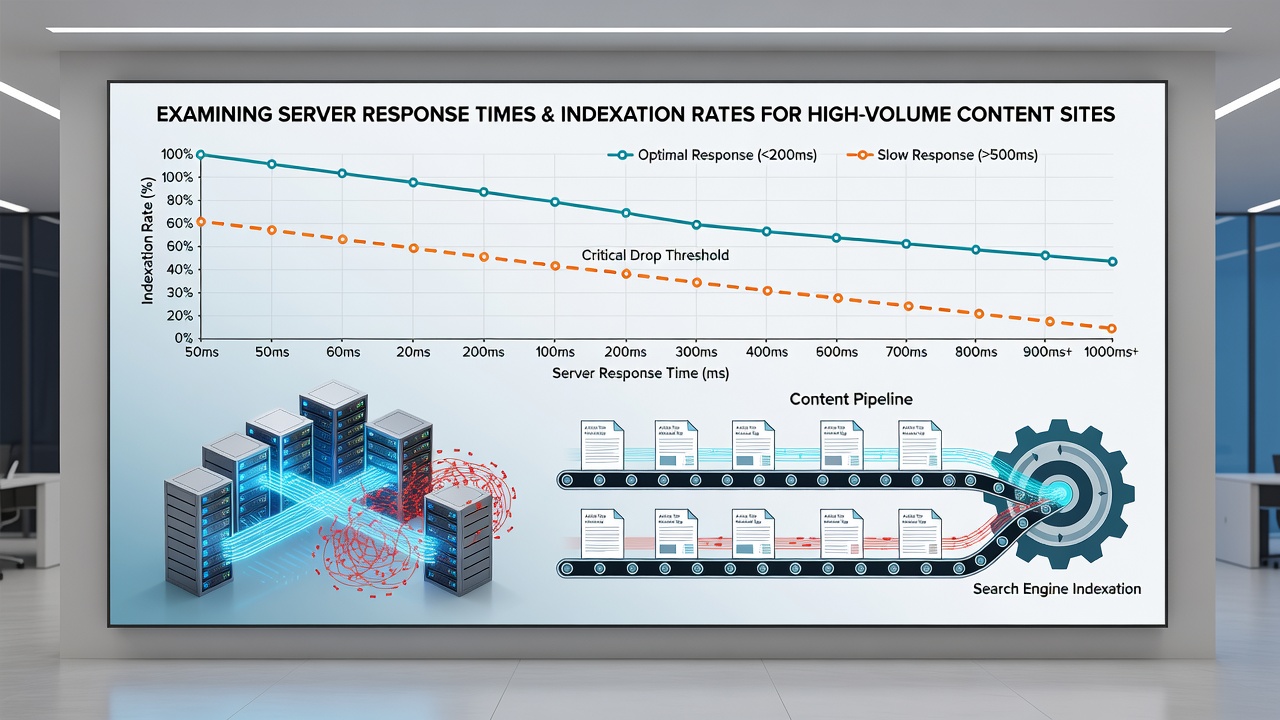
Figures compiled from server logs and search console exports reveal consistent correlations. One study of 250 high-traffic domains found that sites maintaining sub-second median response times indexed 87 percent of newly published pages within 14 days, whereas domains with median times between 2.5 and 4 seconds indexed only 61 percent in the same window. The data further indicated that pages returning errors or timeouts after four seconds rarely appeared in results at all during the observation period. These measurements were taken between January and September 2025 and reflect actual production environments rather than controlled tests.
Crawl Budget Allocation and Its Connection to Latency
Crawl budget represents the number of requests a crawler will make to a given host before moving on to other domains. Latency directly reduces the effective size of that budget because each slow response occupies crawler threads for longer durations. Technical documentation from industry sources explains that once response times cross approximately three seconds, crawlers begin throttling subsequent requests to the same host. This throttling compounds over time, leaving deeper site sections unvisited for weeks or months. High-volume publishers therefore experience uneven indexation, with homepage and category pages appearing promptly while individual article or product pages lag behind.
Those who have examined log files from content management systems report that the effect becomes visible within 48 hours of a sustained latency increase. When engineering teams restore faster response times, crawl rates recover, yet previously missed URLs do not automatically receive priority. Recovery therefore requires explicit signals such as updated sitemaps or internal link adjustments to redirect crawler attention.
Patterns Observed Across Different Site Types
News organizations that publish breaking stories throughout the day show the sharpest drops when response times spike during peak traffic periods. E-commerce sites with extensive product catalogs experience similar but slightly slower effects, partly because product pages often receive stronger internal linking. Academic repositories and government publication portals, which update less frequently, still demonstrate reduced indexation when average response times exceed two seconds, although the absolute number of missed pages remains smaller. In each case the underlying mechanism stays the same: longer server delays reduce the total number of URLs a crawler can process within its allotted time.
Industry reports from organizations such as the World Wide Web Consortium and academic analyses conducted at institutions including Carnegie Mellon University confirm that first-byte timing serves as a reliable predictor of downstream indexing success. These sources emphasize that the relationship holds across multiple geographic regions and content verticals.
Technical Factors Contributing to Response Delays
Database query complexity, unoptimized image delivery, and third-party script execution all extend the time required to generate responses. High-volume sites frequently combine these elements, creating cumulative delays that affect entire sections of a domain. Content delivery network configurations can mitigate some of the impact by serving cached versions, yet dynamic pages that rely on real-time data still encounter latency at the origin server. Monitoring tools that segment response times by page type allow teams to identify which sections require immediate attention before indexation rates decline further.
Conclusion
Server response times function as a measurable constraint on indexation rates for any site that publishes content at scale. Data consistently shows that increases in latency correspond to decreases in the proportion of pages that search engines add to their indexes, and the effect appears across news, retail, and institutional domains alike. Organizations that track first-byte timing alongside crawl statistics maintain clearer visibility into which sections of their sites remain undiscovered by search engines. Continued measurement and adjustment of response performance therefore remain central to sustaining comprehensive indexation on high-volume platforms.