
Dana Carter · 7 October 2026
The Interplay Between Mobile-First Indexing and Structured Data Implementation in Global Websites
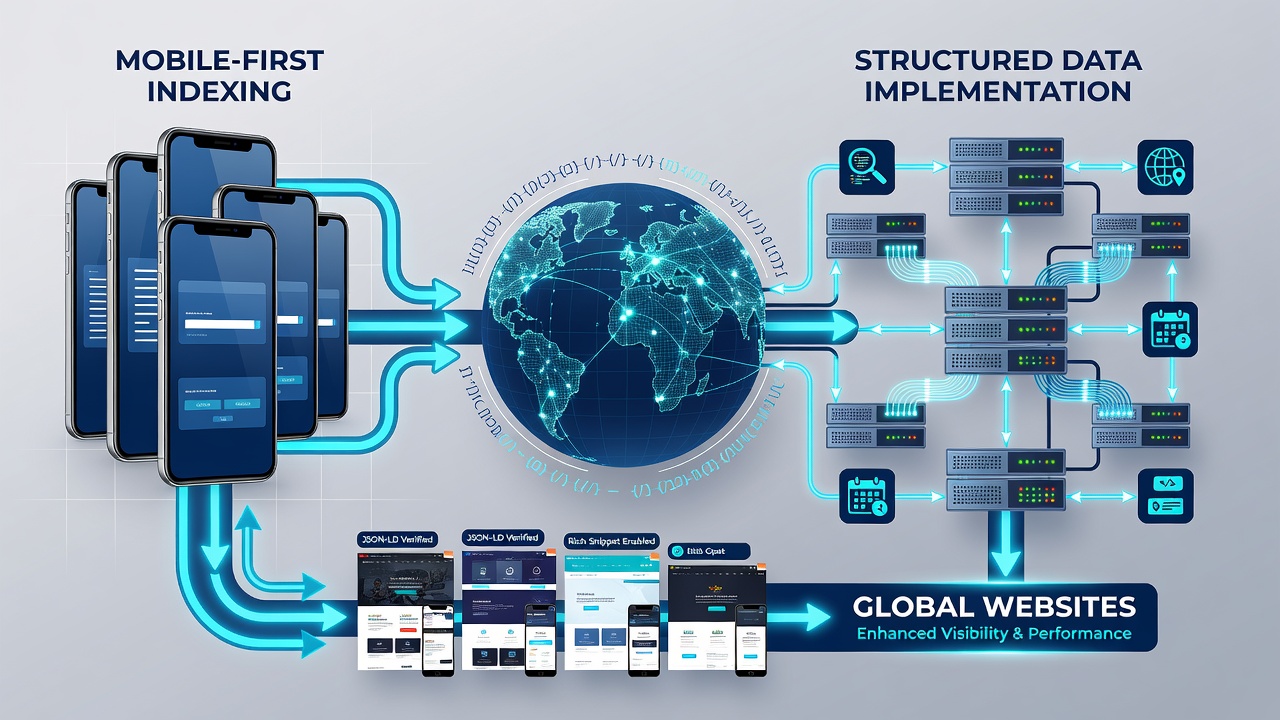
Google shifted to mobile-first indexing across its systems years ago, which means the search engine primarily uses the mobile version of a site's content for ranking and indexing decisions, while desktop versions serve as secondary references when mobile pages exist. This change affects how structured data gets evaluated because crawlers now prioritize mobile-rendered markup over desktop equivalents. Researchers at various institutions have tracked these shifts through large-scale crawl analyses, and figures reveal that sites maintaining consistent structured data across device versions see steadier visibility in rich result features.
Mobile-First Indexing Mechanics and Global Reach
Search engines evaluate mobile pages first when determining indexation priority, which forces webmasters on international domains to ensure responsive designs deliver identical schema markup without truncation or conditional loading that hides elements from smaller screens. Data from monitoring platforms shows that sites serving different structured data sets to mobile and desktop users experience delays in rich snippet eligibility, while those aligning JSON-LD across versions maintain consistent performance. Observers note that global websites handling multiple languages must also coordinate hreflang tags with mobile-first signals so that regional versions receive proper indexing treatment.
By October 2026 monitoring reports indicated continued emphasis on mobile rendering parity, with automated tools flagging mismatches in schema implementation that previously went unnoticed on desktop-only crawls. International organizations tracking digital standards have documented how this affects sites in regions with varying mobile penetration rates, where content delivery networks play a larger role in ensuring structured data loads uniformly.
Structured Data Formats and Consistency Requirements
Structured data relies on vocabularies such as Schema.org to annotate content for enhanced search displays, and implementation typically uses JSON-LD embedded in page head or body sections. When mobile-first indexing governs the process, any schema placed only in desktop templates risks being overlooked, which leads teams managing large global properties to centralize markup generation through content management systems that push identical blocks to all device templates. Studies from academic sources have measured how consistent application correlates with higher click-through rates in international search results, particularly for product and article types that benefit from rich cards.
Challenges on Multi-Regional and Multilingual Sites
Global websites encounter additional layers of complexity because mobile-first indexing interacts with geo-targeting signals and language variants, so structured data must specify correct locale information without creating duplicate content issues across country-code top-level domains. One analysis of enterprise-level properties found that organizations using server-side rendering for schema elements reduced indexing errors compared with client-side injection that sometimes failed on slower mobile connections. European regulatory bodies overseeing digital markets have highlighted the need for transparent data practices that align with these technical requirements, while similar guidance appears in reports from Canadian and Australian digital agencies focused on accessibility and discoverability.
Take one research project that examined crawl logs from sites spanning Asia, Europe, and the Americas: it revealed that pages missing mobile-optimized structured data for local business or event markup showed slower adoption into knowledge panels. Those managing such properties often discover that implementing unified data pipelines prevents the fragmentation that occurs when regional teams handle markup independently.
Implementation Patterns Observed in Practice
Teams working on high-traffic international domains frequently adopt centralized schema management platforms that generate device-agnostic JSON-LD, then validate output through mobile emulation tools before deployment. This approach addresses the reality that Googlebot smartphone agents now dominate indexing activity, so any structured data intended for rich results must render completely on those agents. Industry reports indicate that sites combining proper canonical tags with consistent schema across mobile and desktop versions maintain stronger indexation rates, especially when content volume increases and crawl budgets become constrained.
What's interesting is how validation errors surface differently under mobile-first conditions, where missing required properties in mobile templates trigger warnings that desktop-only checks would miss. Organizations tracking these metrics use automated reporting to surface discrepancies before they affect search visibility across regions.
Conclusion
The relationship between mobile-first indexing and structured data implementation continues to shape how global websites achieve visibility, with evidence showing that alignment across device versions supports reliable rich result performance. Data from ongoing crawl studies and technical analyses underscores the value of unified markup strategies that account for regional variations in content delivery. As search systems evolve, sites maintaining these technical consistencies position themselves to meet indexing expectations without introducing device-specific discrepancies.